

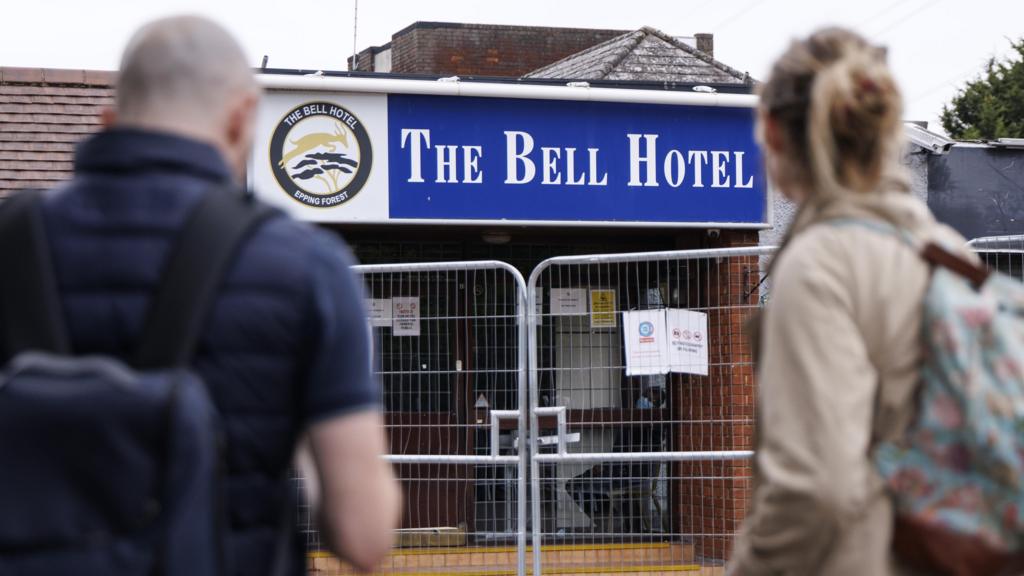
In a decision closely watched across the UK, the High Court has ruled that asylum seekers can continue staying at The Bell Hotel in Epping, Essex, following a legal challenge by the Epping Forest District Council. The judgment marks a significant Epping asylum ruling, clarifying the limits of local authority powers in enforcing planning laws when national asylum obligations are at play.
The council had sought to stop asylum seekers from being accommodated at the hotel, claiming that the building’s owner, Somani Hotels, breached planning regulations. However, Mr Justice Mould dismissed the case, stating that an injunction was “not an appropriate means of enforcing planning control.” He noted that while some residents expressed concern about crime following an incident involving a former asylum seeker, such fears did not justify eviction.
Court Recognizes National Duty to House Asylum Seekers
In his ruling, Justice Mould emphasized the “continuing need” to accommodate people awaiting asylum decisions, enabling the Home Secretary to meet legal duties under immigration law. He also rejected claims that the hotel’s management had shown a “flagrant or persistent abuse” of planning controls, stating that the owner had cooperated with authorities throughout the process.
The ruling effectively overturns an earlier temporary injunction that had restricted the use of the hotel for asylum accommodation. The Home Office, which intervened in the case, warned that upholding the injunction could lead other councils to pursue similar actions, potentially undermining national asylum housing efforts.
Political Reaction to the Epping Asylum Ruling
The verdict sparked sharp political reactions. Local Conservative MPs called the decision a “slap in the face” to residents, while Shadow Home Secretary Chris Philp argued that “the people of Epping have been silenced in their own town.” Meanwhile, human rights groups praised the outcome, calling it a reaffirmation of the UK’s humanitarian obligations.
Community Divisions and Broader Implications
The Bell Hotel had become a flashpoint for protests and counter-protests over the summer, exposing deep divisions within the community. While some residents voiced safety concerns, others stressed compassion and due process for people fleeing war and persecution.
Legal analysts say the Epping asylum ruling may set a precedent affecting how councils across England manage hotels and other temporary facilities used by the Home Office to house asylum seekers. The judgment reinforces that planning laws cannot override statutory responsibilities to protect vulnerable migrants.
As the government faces increasing pressure to reduce hotel use for asylum housing, this ruling underscores the tension between local governance, public opinion, and national immigration policy.


