

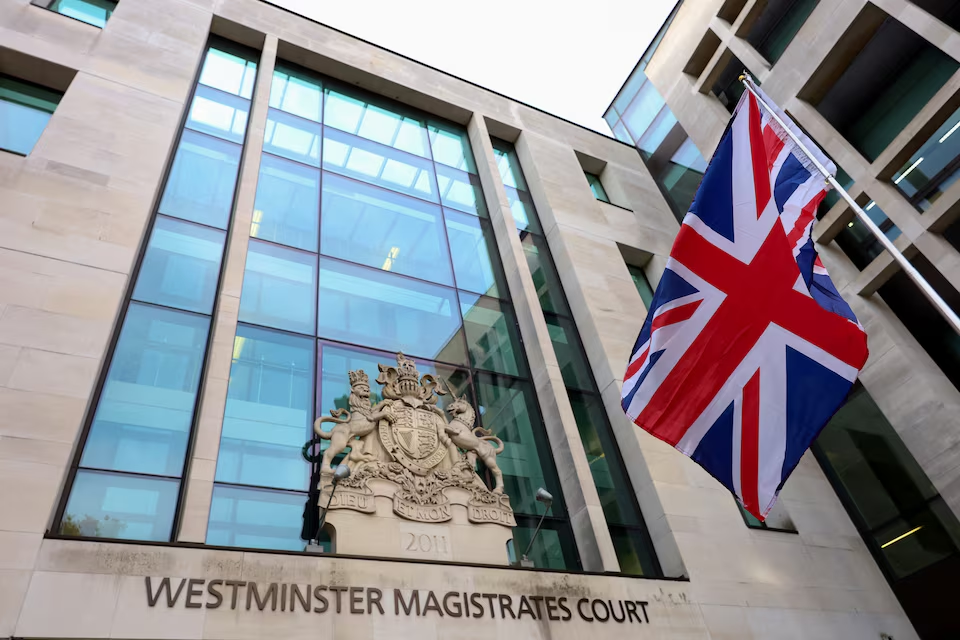
Three British men have appeared in a London court over an alleged conspiracy to target opponents of the Pakistani government. Prosecutors accuse the men of planning coordinated attacks on two individuals living in the UK. They detailed the alleged plot at Westminster Magistrates’ Court on Saturday. The targets were Shahzad Akbar, a former adviser to jailed ex-Prime Minister Imran Khan, and Adil Raja, a former army officer turned YouTuber. The attackers allegedly planned the assaults for Christmas Eve last year. Consequently, UK counter-terrorism police are leading the case due to its highly targeted nature.
Prosecutor Warren Stanier described a “sophisticated and planned agreement.” The plan allegedly involved visiting the victims’ houses at almost the same time. A masked man reportedly assaulted Akbar at his Cambridge home after he answered the door. Meanwhile, two men tried to force entry into Raja’s home in Chesham. Fortunately, Raja was not present at the time. A week later, suspects allegedly attempted to set fire to Akbar’s home with a burning rag. These incidents raise serious concerns about transnational political violence on UK soil.
Details of the Alleged Attacks and Charges
The alleged attacks followed a precise timeline. On December 24, Shahzad Akbar answered his door in Cambridge. A masked man asked for him by name and then struck him multiple times in the face. Simultaneously, two men arrived at Adil Raja’s address northwest of London. They attempted to force entry but failed because Raja was absent. Subsequently, a further incident occurred at Akbar’s home on December 31. Two men, one possibly carrying a firearm, broke a window and tried to throw a burning rag inside. However, it caused no damage.
Authorities have charged three men. They accuse Karl Blackbird, 40, of two counts of conspiracy to assault causing actual bodily harm. Chris McAulay, 39, faces one count of the same charge. Furthermore, they charged Doneto Brammer, 21, with possession of a firearm and conspiracy to commit arson. The men did not enter a plea, so the court remanded them in custody. They will next appear at London’s Old Bailey court on February 13. Police have arrested three other men but released them or not charged them yet.
Background of the Targeted Individuals
The two targets are prominent critics of the current Pakistani government. Shahzad Akbar served as an adviser to former Prime Minister Imran Khan. Authorities in Pakistan currently imprison Khan on charges he claims are politically motivated. Akbar has become a vocal advocate for Khan and a critic of the military establishment. He now lives in exile in the UK, where he continues his political activism.
Adil Raja is a former Pakistani army officer. He now runs a popular YouTube channel that fiercely criticizes the Pakistani military and government. In January, a Pakistani court convicted him in absentia on terrorism-related charges. These charges link to online support for Imran Khan. Raja denies the allegations, calling them politically motivated. Therefore, both men represent a segment of the Pakistani diaspora that actively opposes the authorities in Islamabad from abroad.
Investigation and Geopolitical Implications
Counter-terrorism police are leading the investigation, which underscores its seriousness. UK authorities treat the alleged plot as a potential act of politically motivated violence with international dimensions. This case tests the UK’s ability to protect individuals whom foreign actors target for their political views. It also raises questions about the export of Pakistan’s intense domestic political conflicts.
The Pakistani government has not commented on the UK court case. However, it has previously accused both Akbar and Raja of serious crimes. Consequently, the situation creates diplomatic sensitivities. The UK must navigate its relationship with Pakistan while upholding its legal duty to protect residents from violence. The outcome could influence how other Western countries handle similar incidents involving diaspora political activists.
Legal Proceedings and Next Steps
The three accused men will face a more detailed hearing at the Old Bailey, the central criminal court, in February. Prosecutors will present further evidence to support the conspiracy charges. The complexity of the case, involving multiple locations and incidents, suggests a lengthy legal process. Establishing the motive and any potential connections to actors in Pakistan will be a key focus.
The defense may challenge the conspiracy narrative or the evidence linking the men to the specific acts. The involvement of a firearm and an arson attempt elevates the severity of the charges. If convicted, the defendants could face significant prison sentences. Consequently, the Pakistani diaspora and human rights groups concerned about the safety of political exiles will closely watch the case.
Broader Concerns for Diaspora Communities
This case highlights the vulnerabilities of diaspora communities engaged in homeland politics. Exiles often feel safer criticizing authoritarian regimes from abroad. However, this incident suggests physical threats can follow them. Therefore, it may prompt other activists to enhance their security and for host countries to reassess protection measures.
The UK has a responsibility to ensure people do not use its territory for settling foreign political scores. Robust legal action in this case would send a strong deterrent message. It would affirm that political violence, regardless of its origin or target, will face the full force of British law. For Shahzad Akbar and Adil Raja, the court process offers a path to justice, but it also reminds them of the enduring risks they face.


