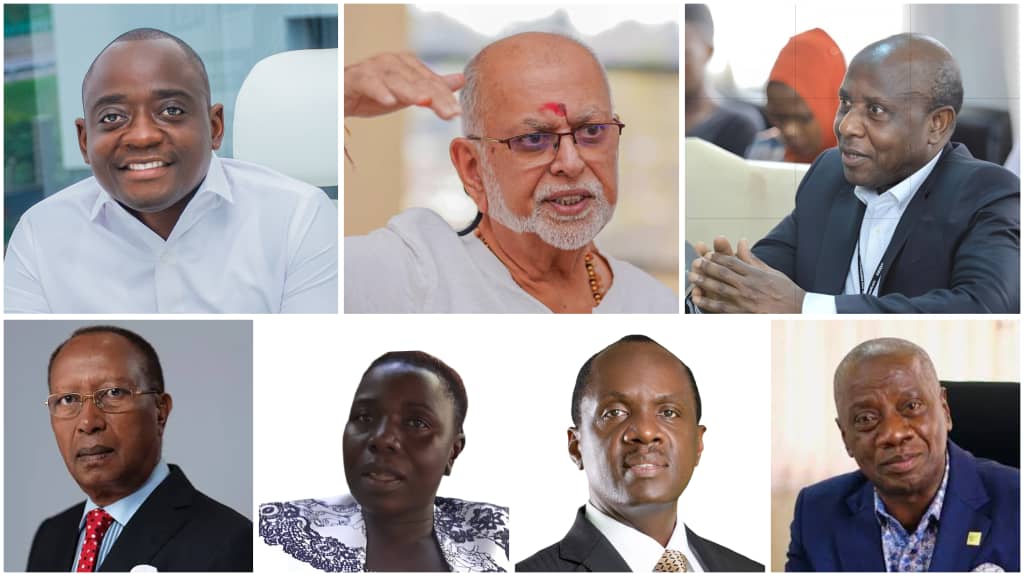
Uganda’s financial elite in 2026 command a level of private capital that now exceeds 10 billion dollars in estimated combined wealth. In a national economy valued at roughly 65 billion dollars, that concentration is material. Moreover, it highlights how capital formation in Uganda has been driven more by private asset control than by public market participation.
Unlike advanced economies where stock exchanges define billionaire rankings, Uganda’s financial elite have built their positions through commercial real estate, petroleum distribution, manufacturing platforms and selective telecommunications equity exposure. Consequently, tangible infrastructure ownership rather than financial leverage remains the defining characteristic of wealth at the top.
At the same time, per capita income remains modest and a significant share of the population operates within informal sectors. Therefore, the expansion of Uganda’s financial elite stands in contrast to the broader income base. Growth is visible in cranes, towers and industrial estates. However, ownership of those assets remains concentrated among a relatively small group of capital holders.
The Property Vanguard
A defining feature of Uganda’s financial elite is dominance in high-density commercial real estate. Kampala’s central corridors function as valuation engines, where land scarcity and tenant density amplify rental income.
Hamis Kiggundu, whose estimated wealth approaches 1.35 billion dollars, exemplifies this model. Through successive construction cycles, he reinvested rental proceeds into mixed-use towers and urban retail complexes. In addition, diversification into beverage manufacturing and fintech participation broadens his portfolio beyond property. Consequently, his capital structure reflects both real estate concentration and emerging industrial positioning.
Similarly, John Bosco Muwonge and Drake Lubega have built substantial fortunes through control of arcades and commercial buildings in prime trading zones. Because inner-city land is structurally limited, rent and appreciation create powerful compounding effects. As a result, these property-focused figures remain central pillars of Uganda’s financial elite.
The Conglomerate Architects
While property dominates, diversification distinguishes several members of Uganda’s financial elite. Sudhir Ruparelia stands out for his broad-based conglomerate model. Commercial property anchors his balance sheet. Meanwhile, hospitality estates such as Speke Resort Munyonyo generate operational revenue tied to tourism and conference demand. Insurance and education provide institutional cash flow, smoothing cyclical volatility.
Karim Hirji follows a comparable hybrid approach. Hospitality assets, automotive distribution and commercial real estate form a diversified structure. Therefore, his wealth reflects a blend of demand-driven enterprise and asset-backed preservation.
These conglomerate architects demonstrate that diversification within tangible sectors can reinforce resilience without heavy reliance on public equity markets.
The Industrial and Distribution Powerhouses
Another segment of Uganda’s financial elite derives capital from industrial scale and distribution networks. Amos Nzeyi anchors his wealth in beverage manufacturing, where production volume and consumer demand drive valuation. Food production and hospitality ventures add recurring revenue layers.
Ahmed Omar Mandela integrates petroleum retail, food service and agro-processing. City Oil provides recurring liquidity linked to transport demand. Meanwhile, consumer-facing hospitality brands capture urban spending patterns. Consequently, his capital base reflects vertical integration across supply chains.
Godfrey Kirumira also built his fortune through petroleum distribution. However, diversification into telecommunications infrastructure and commercial property has strengthened long-term stability. These figures highlight how control of distribution networks and value-added production can rival property in wealth generation.
The Equity and Infrastructure Influencers
Although tangible assets dominate, equity participation and infrastructure investment form another dimension of Uganda’s financial elite. Charles Mbire’s stake in MTN Uganda positions him within the corporate governance sphere of one of the country’s largest listed firms. Therefore, his wealth is more market-sensitive than purely land-based peers.
Patrick Bitature illustrates a related trajectory. Telecommunications distribution formed his initial capital base. Subsequently, expansion into energy infrastructure and hospitality diversified his portfolio. While infrastructure projects are capital-intensive, they provide durable, long-term asset-backed exposure when regulatory conditions remain predictable.
The Structural Implication
Taken together, Uganda’s financial elite reveal a consistent structural pattern. Wealth at the top remains asset-intensive. Commercial real estate dominates. Petroleum distribution and manufacturing follow. Equity exposure and infrastructure investments provide strategic diversification.
Moreover, access to development finance, prime land and large-scale distribution networks creates substantial entry barriers. Consequently, capital compounds most rapidly for those who control physical income-producing assets. In contrast, wage-based income growth struggles to match the pace of asset appreciation.
As Uganda approaches oil production and deeper digital integration, the composition of private wealth may gradually evolve. New sectors could broaden participation. Alternatively, concentration may intensify further.
For now, Uganda’s financial elite shape the skyline, the supply chains and the industrial output of the country. Their balance sheets reflect not only personal success but also the architecture of economic power in modern Uganda.
READ: Italian Teen Golfer Named in Swiss Fire Tragedy—but Not Confirmed