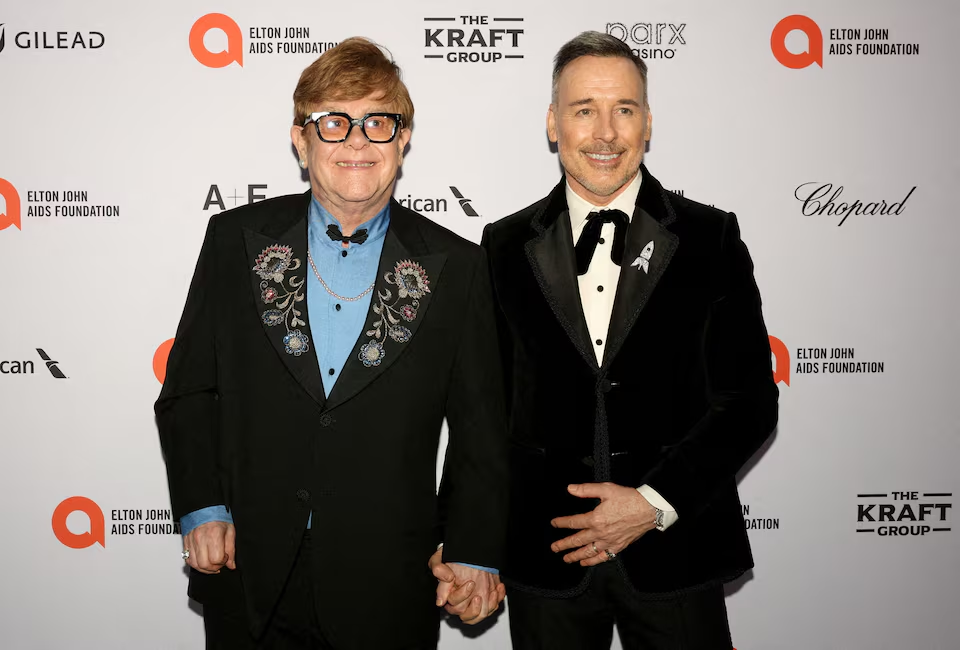
Elton John testified he was incensed to learn of allegations that his landline phones were bugged on behalf of the Daily Mail. The singer appeared via videolink at London’s High Court on Friday. He is suing Associated Newspapers, the publisher, for alleged widespread privacy intrusions. John called the newspaper’s actions “outside even the most basic standards of human decency.” Consequently, his testimony marks a pivotal moment in the high-profile trial. He is joined by his husband David Furnish, Prince Harry, and four other claimants. They accuse the publisher of phone hacking and other unlawful information gathering over many years.
John stated he learned of the alleged wrongdoing from his close friend, actor Elizabeth Hurley. She is also a claimant in the case. Hurley was informed by a private investigator while staying with John shortly after her son’s birth. The investigator claimed John’s three landline phones were “hacked.” John said he and his husband were “outraged” when they realized the seriousness. “I was incensed,” the singer told the court. He apologized for appearing remotely, citing the “inconvenience of my eyesight.” Associated Newspapers denies all allegations, calling them “preposterous smears.” The publisher argues its stories used lawful sources or public domain information.
The Core Allegations and Contested Evidence
The Elton John trial centers on ten articles published between 2002 and 2015. John and Furnish claim these stories resulted from privacy invasions. One key article from 2010 reported the couple had a child via surrogacy. John asserted the Mail obtained a copy of their son’s birth certificate before they did. “It has been truly sickening… to see the disclosure in our case, with Zachary as a target when he was just born,” John wrote in his witness statement. He also condemned intrusions into his medical health. The evidence from a private investigator is highly contested. The investigator initially supported the claimants but later retracted his statement, casting doubt on its authenticity. This retraction is a major point of dispute in the trial.
The Defense Strategy and Cross-Examination
Associated Newspapers’ lawyer, Catrin Evans, challenged John during cross-examination. She suggested information in the articles could have come from lawful sources. These might include John’s own spokesperson or his “leaky” social circle. John firmly rejected this. “My friends do not talk to the press and that is why they are still my friends to put it bluntly,” he stated. He later accused Evans of “clutching at straws.” He questioned why she was not focusing on the “horrendous things” Associated had allegedly done. The defense maintains its reporting was legitimate. It argues that celebrities’ social circles often provide information, and that some details were already public. This defense aims to undermine the claimants’ core argument of systematic illegal activity.
Broader Context of the Legal Battle
This Elton John trial is part of a wider legal campaign against British tabloids. Prince Harry is a co-claimant, continuing his long-running battle with the press. The case alleges a pattern of unlawful information gathering spanning decades. Similar cases have previously led to substantial damages and public apologies from other newspapers. The outcome could set a significant precedent for privacy law and press accountability in the UK. The trial is scheduled to last nine weeks and is due to conclude next month. John was the last of the seven claimants to give evidence. The judge’s eventual ruling will be closely watched by media, legal experts, and public figures concerned about press overreach.
Personal Impact and Emotional Testimony
John’s testimony highlighted the personal toll of the alleged intrusions. He described feeling targeted when sick and unwell. The focus on his son’s birth was particularly abhorrent to him. The singer, who does not own a mobile phone, emphasized his vulnerability through landline interception. “I’ve never been afraid of fighting my corner … with the British press when I think I’ve been treated badly or there’s been an injustice,” he said. This statement frames the lawsuit as a principled stand, not merely a financial pursuit. His emotional description of the actions as a breach of “human decency” seeks to frame the ethical stakes beyond legal technicalities, appealing to the court’s moral judgment as well as its interpretation of the law.
Potential Outcomes and Implications
The trial’s conclusion next month will deliver a verdict with far-reaching implications. If the claimants succeed, it could lead to substantial damages and force reforms at Associated Newspapers. It would also empower other potential victims to come forward. A victory for the publisher would be a major rebuttal of the phone-hacking allegations that have dogged the British tabloid industry for years. Regardless of the verdict, the Elton John trial has already exposed the bitter conflict between celebrity privacy and press freedom. It underscores the ongoing struggle to define ethical boundaries in journalism. The case also tests the resilience of individuals seeking redress against powerful media institutions, a battle that Elton John has now joined with characteristically defiant passion.