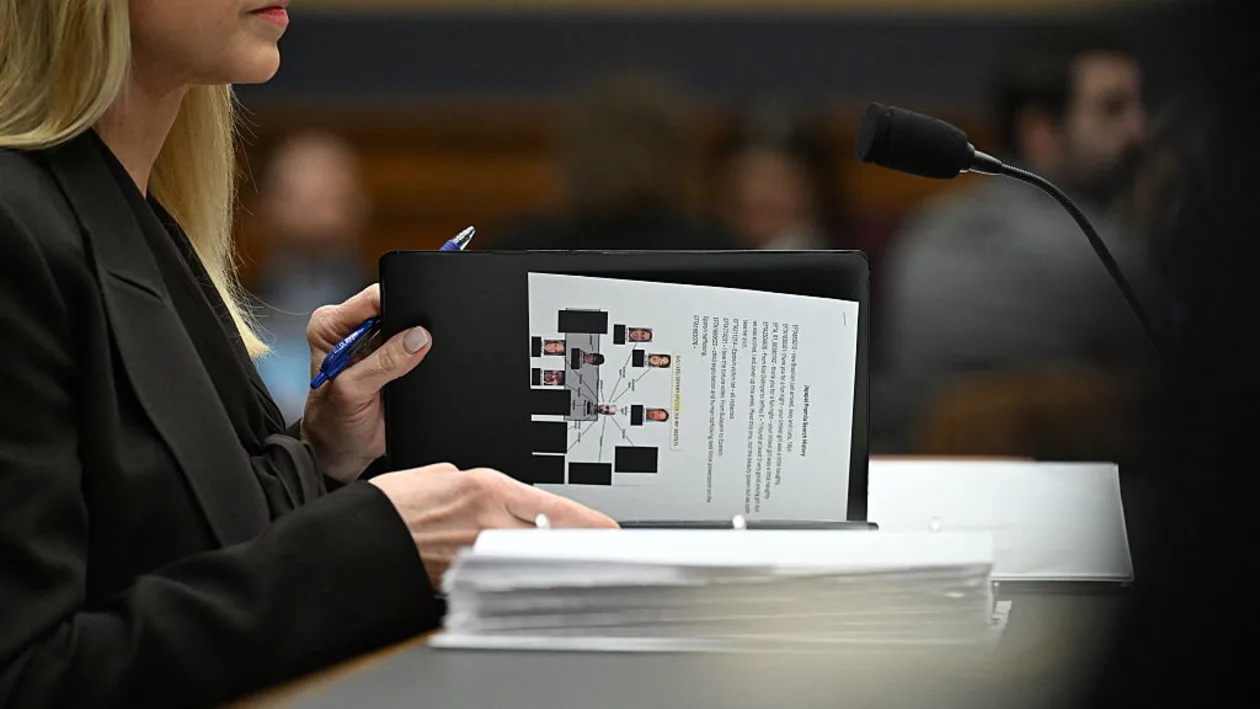
In a contentious House Judiciary Committee hearing on February 11, 2026, U.S. Attorney General Pam Bondi found herself embroiled in controversy after it appeared that she had a printout of Rep. Pramila Jayapal’s search history from the Department of Justice’s (DOJ) database. The documents, related to the investigation into the infamous sex trafficker Jeffrey Epstein, were part of a broader discussion that left lawmakers, particularly Jayapal, accusing the DOJ of improper surveillance of congressional members.
The alleged surveillance was highlighted during the hearing when Bondi was photographed holding a binder labeled “Jayapal Pramila Search History,” containing a list of documents that appeared to correspond with the Epstein files that Jayapal had previously accessed. This incident has raised concerns about the integrity of the separation of powers and the role of Congress in investigating government actions.
Jayapal Accuses DOJ of Spying on Congressional Actions
Rep. Pramila Jayapal, a Democratic congresswoman from Washington, took to social media following the hearing to condemn the actions of the DOJ, calling them an outrageous violation of privacy and the constitutional principle of separation of powers. “It is totally inappropriate and against the separations of powers for the DOJ to surveil us as we search the Epstein files,” Jayapal wrote in a post on X (formerly Twitter), referring to the controversial surveillance of her search history.
Jayapal had been part of a group of lawmakers who recently visited the DOJ to view documents related to Epstein’s criminal activities—files that had not been made available to the public. These visits were part of ongoing efforts by Congress to hold those responsible for Epstein’s crimes accountable and to determine whether further action needed to be taken. Jayapal’s personal outrage was evident as she described her experience with Bondi during the hearing. “Bondi showed up today with a burn book that held a printed search history of exactly what emails I searched,” she said. “That is outrageous, and I intend to pursue this and stop this spying on members.”
Bondi’s Unwillingness to Apologize and Heated Exchanges
Throughout the hearing, the exchange between Jayapal and Bondi grew increasingly tense. Jayapal, who was deeply concerned about the DOJ’s handling of the Epstein files, asked survivors of Epstein’s abuse, who were present in the room, to stand up and indicate if they had been unable to meet with DOJ officials. Multiple women stood and raised their hands, signifying their frustration with the DOJ’s failure to provide them access.
Bondi, however, was dismissive in her response. When Jayapal asked her to apologize to the victims for the DOJ’s failure to redact their names properly in the released files, Bondi replied, “I’m not gonna get in the gutter for her theatrics.” This response added fuel to the fire, with Jayapal accusing Bondi of not taking responsibility for the DOJ’s mishandling of sensitive documents that could have endangered the privacy of Epstein’s victims.
This exchange, particularly Bondi’s refusal to offer an apology or take ownership of the errors, deepened the outrage not just among the victims present but also among the public and other lawmakers who felt that the DOJ was not taking the matter seriously.
Questions Surrounding Bondi’s Possession of Search History Printout
What intensified the controversy were the reports that Bondi appeared to have a printout of Jayapal’s search history, a detail that was immediately flagged by other members of Congress and political observers. If the DOJ indeed tracked the specific searches of members of Congress, this would represent a significant overreach and a violation of the separation of powers, as it would imply that the DOJ was monitoring the investigative actions of legislators who were simply doing their job.
Jayapal herself raised the question about whether the DOJ had provided early access to the Epstein files to members of Congress in order to track their questions and lines of inquiry ahead of the hearing. “Is this the whole reason they opened [the files] up to us two days early? So they could essentially surveil members to see what we were gonna ask her about?” she questioned in an interview with MS Now, further adding fuel to the growing suspicion that the DOJ may have been using the release of the files to monitor the actions of lawmakers for political or strategic reasons.
The Political Implications of the Epstein Files Release
The incident also highlights the ongoing tension between the executive branch and the legislative branch regarding the investigation into Epstein’s criminal activities. While the DOJ has attempted to frame its actions as transparent and in accordance with legal requirements, the apparent mishandling of the Epstein files has raised questions about the department’s commitment to fully serving the public’s interest and the needs of the victims.
Epstein survivors and their advocates have long called for more transparency and accountability from the DOJ, demanding that the full scope of Epstein’s network be exposed to ensure justice for those who suffered under his abuse. Yet, as new revelations emerge about the DOJ’s actions, including the questionable release of sensitive personal information and the redaction errors in the Epstein files, critics argue that the department is more focused on protecting powerful individuals than on achieving true justice.
Bondi’s Defense and Denials
In her defense, Bondi tried to downplay the situation by framing the issue as a misunderstanding and a product of the short time frame given to the DOJ for reviewing and redacting the massive volume of documents related to Epstein’s case. “We were given 30 days to review and redact and unredact millions of pages of documents,” she said, claiming that the DOJ’s error rate was low. She also promised to correct any mistakes, stating that if any names of men had been improperly redacted, the department would “unredact it.”
However, this explanation did little to satisfy Jayapal and other critics, who felt that the DOJ’s handling of the Epstein files was part of a larger pattern of bureaucratic indifference to the needs of survivors and a lack of accountability for those who were involved in Epstein’s criminal enterprise.
Growing Pressure from Survivors and Lawmakers
The frustration surrounding the Epstein files has only intensified in the days following the release, with survivors and their supporters now rallying to demand that the DOJ release the full, unredacted files and provide answers for the errors and omissions that have marred the investigation. Survivor Liz Stein, who was present during the hearing, voiced her disappointment, stating, “A partial release of these files, riddled with improper redactions that expose the vulnerable and shield the powerful from accountability, is not justice.”
As the pressure on the DOJ continues to build, members of Congress, including both Democrats and Republicans, are increasing their demands for transparency and accountability. The public outcry surrounding Bondi’s testimony and the broader handling of the Epstein case is unlikely to subside anytime soon, as survivors and lawmakers alike continue to call for justice.