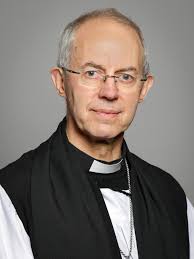
London, March 30, 2025 —
Former Archbishop of Canterbury Justin Welby has said he forgives serial abuser John Smyth, calling his own feelings “irrelevant” compared to the suffering of victims. The comment came during Welby’s first interview since stepping down last November, following criticism over his handling of the Church of England’s most damning abuse scandal.
Smyth, a barrister and Christian leader, is believed to have abused over 100 boys and young men across the UK and Africa over several decades. He died in 2018 without ever facing prosecution. A scathing 2024 Makin Report accused Welby of failing to act despite having access to key information as early as 2013.
“I forgive him,” Welby told the BBC’s Sunday with Laura Kuenssberg. “But it’s not me he abused. Whether I forgive or not is, to a large extent, irrelevant.”
“Absolute Failure” and Deep Regret
Welby admitted to feeling a “deep sense of personal failure,” acknowledging that the Church failed to protect children from Smyth’s systematic abuse.
“I didn’t do the job on safeguarding,” he confessed. “We are supposed to be shepherds of the flock — and I failed on that.”
Despite maintaining he was unaware of the abuse until 2013, the report found it “unlikely” he had no prior knowledge, especially considering his close ties to Smyth in the late 1970s. Smyth was known to use Christian camps as grooming grounds for his victims.
Pressed on why more wasn’t done, Welby said police had advised him not to interfere, fearing contamination of the investigation. “I should have pestered them,” he added. “I see that now.”
Survivors Want Truth, Not Forgiveness
Welby’s comments on forgiveness were met with frustration by survivors, who say he has never personally apologized or explained his inaction.
A victim known as Graham, who submitted a 2013 complaint, said:
“If in 2017 he had come to us and said ‘I’m sorry, I messed up,’ I would have forgiven him immediately — but he never has in those terms.”
Graham added that unless Welby stops avoiding victims and starts offering transparency, “I will not forgive him.”
Welby denied deliberately ignoring victims but acknowledged that the Church has not done enough to support survivors. He also admitted that a speech he gave in December 2024 — in which he appeared to make light of his resignation — was “profoundly shameful” and “inexcusable.”
Struggles with Reform and a Divided Church
Welby also spoke about his failure to convince the Church of England’s General Synod to adopt independent safeguarding measures. Despite supporting full reform, Welby said the Archbishop has limited power over institutional change.
He also expressed disappointment over the Synod’s resistance to granting full equality for women and LGBTQ+ clergy, saying:
“I would have loved to wave a magic wand, but I didn’t have the votes.”
Welby warned of a possible split within the global Anglican Communion, calling it a “tragedy” if divisions between England and other regions become irreparable.
A Changing Society, A Shifting Role for the Church
Reflecting on the 2021 census showing Christianity now a minority in England and Wales, Welby highlighted the growing diversity of British society:
“We are one of the most diverse nations on Earth. The challenge now is creating a cohesive identity.”
He argued that the Church must help define that identity by promoting shared values and inclusivity — despite its own internal failures.
Church Responds to Interview
In response, the Church of England reiterated its apology to victims and said the interview may “reawaken trauma” for survivors. A spokesperson emphasized that anyone who comes forward will be met with compassion and support.
The Church said it continues to improve safeguarding standards, with new training and external audits in place.