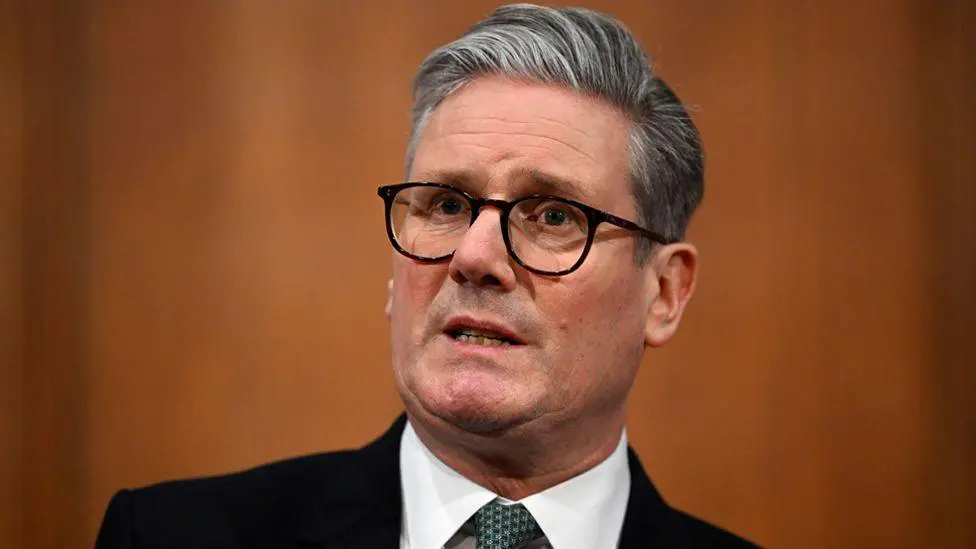
EU market alignment has emerged as a central theme in Prime Minister Sir Keir Starmer’s latest comments on Britain’s post-Brexit future. Starmer said the UK should move towards closer alignment with European Union markets when it serves the national interest, marking his clearest signal yet of a reset in relations with Brussels.
While ruling out rejoining the EU single market or customs union, Starmer argued that practical cooperation with Europe could strengthen trade and economic growth without reversing Brexit.
EU market alignment framed as national interest
EU market alignment, according to Keir Starmer, should be judged on whether it benefits the country. He said that the UK was better placed to deepen alignment with the EU single market rather than the customs union, particularly after securing trade deals with the United States and India.
Starmer stressed that any closer relationship would remain a sovereign choice. He said the aim was not to revisit past Brexit debates but to focus on what delivers economic value now.
Why the single market matters more than the customs union
Starmer argued that EU market alignment through the single market offers more flexibility than a customs union. He suggested that closer regulatory alignment could improve trade flows while preserving the UK’s ability to strike independent deals with global partners.
The prime minister confirmed that the UK is already aligning with EU rules in areas such as food and agriculture. Those changes, he said, would be implemented this year and could act as a model for cooperation in other sectors.
Sector-by-sector approach to EU market alignment
Rather than a sweeping policy shift, Starmer outlined a sector-by-sector strategy. Market alignment would be assessed individually across industries, depending on economic impact and national interest.
He described this approach as pragmatic and forward-looking, saying it had already helped deliver the strongest UK–EU relationship in a decade.
Labour pressure and political reaction
Starmer’s comments come amid pressure from within Labour to go further. Thirteen Labour MPs recently backed proposals that could open the door to customs union talks, although the government insists this is not current policy.
Conservatives were quick to criticise the stance. Shadow foreign secretary Priti Patel accused Starmer of betraying Brexit and warned that closer market alignment could limit the UK’s regulatory freedom and trade ambitions.
Youth mobility and freedom of movement concerns
Questions have also been raised about negotiations on youth mobility schemes between the UK and the EU. Critics fear such arrangements could lead back to free movement.
Starmer rejected that claim, insisting there would be no return to freedom of movement. He welcomed youth exchanges and confirmed the UK’s decision to rejoin the Erasmus programme, calling it a positive step for education and research.
What EU market alignment means for the UK economy
Supporters argue that EU market alignment could help remove trade friction, boost exports, and support growth. Liberal Democrat MP Layla Moran welcomed Starmer’s tone, though she said her party favours a customs union over the single market.
Trade union leaders have also backed closer ties. The head of the TUC previously described the closest possible economic relationship with the EU as essential for growth.
EU market alignment marks a cautious reset
EU market alignment, as framed by Starmer, is not about undoing Brexit but adapting to economic realities. By focusing on practical cooperation rather than grand reversals, the government appears to be testing a middle path between sovereignty and integration.
Whether this approach satisfies critics on either side remains unclear, but it signals a cautious shift in how the UK plans to manage its relationship with Europe in the years ahead.